TEST
Saturday, November 11, 2023

Thursday, April 16, 2015
Definitions for
Coding and Understanding Phonics:
**Asterisks** indicate we've covered these concepts in class and have been using them on an regular basis since quarter one during our phonics block.
• **Breve**- a coding mark used to indicate a vowel's short sound coded with an arc above the short vowel
• **Cedilla**- a coding mark on the letter c to
indicate a soft sound (makes a /s/ sound
not a regular hard c like /k/ coded with a hook on the bottom of the letter c
• **Code: to mark a word with symbols to provide information about how
to pronounce it
• **Combination**- two letters that come together to
make an unexpected sound (ar, er, ir, or, ?xml:namespace prefix = st1 ns =
"urn:schemas-microsoft-com:office:smarttags" /ur, qu, wh); coded with an arc
• **Digraph**- two letters that come together to
make one new sound (consonant digraphs: ch, ck, ng, ph, sh, th; vowel digraphs: ai, au, aw, ay, ea, ee, ei, ew, ey,
ie, oa, oo, ow, ue); underline to code
• **Diphthong**- two vowel sounds that come together
so quickly that they are considered one syllable (oi, ou, ow, oy); code with an arc
• **Final, stable syllable**: a nonphonetic syllable that occurs in
the final position frequently enough to be considered stable (ble, cle, dle,
fle, gle, kle, ple, sle, tle, zle, tion); code with a bracket
• **Ghost Letter Digraphs**: two letters that make one
sound; first sound is silent (gn, kn, wr); silent letters are coded with a diagonal slash (We’ve covered kn
and wr in class, not gn yet.
• These DON’T get coded - High-frequency
words: those words that
occur most often in written text
• K-back: a coding mark consisting of a vertical line on the back of a c that makes the /k/ sound
• **Macron**: a coding mark used to indicate a
vowel's long sound; line drawn above a
vowel saying its long name
• Prefix: a letter or group of letters added to the beginning of a root
word that changes the meaning or usage of the word (dis, pre, un) code by putting a box around the prefix
• **Root word**: a word with no prefix or suffix added code the root word using the above and
below marks
• **Schwa**: a coding mark resembling an upside-down e placed over a vowel to indicate the short u sound
• These DON’T get coded - Sight word: a word of which all or part does not
follow phonetic rules
• **Sneaky e**: the e in the vowel rule v-e; it makes
the vowel have a long sound (a-e, e-e, i-e, o-e, u-e); coded by drawing a diagonal slash through
the silent e and a macron drawn above the long vowel
• **Suffix**: a letter or group of letters added to
the end of a root word that changes the meaning or usage of the word (vowel suffix: ed, er, es, est, ing, y; consonant suffix: ful, less, ly, ness, s); suffixes are coded by boxing in the
affix added to the root word
• **Syllable**: a word or part of a word that
contains only one vowel sound and is made by one impulse of the voice; syllables are split with a vertical
line
• **Trigraph**: three letters that come together to
make one sound (dge, igh, tch); underline trigraphs to code
• **Twin consonsants**: two identical consonants making only
one sound; coded with a
diagonal slash for silent letters
• **Voice line**: a coding mark consisting of a horizontal line through the middle of a
letter or letters, representing a
voiced sound (s, th)
• **"Wild Colt" Words**: words that only have one vowel and
break the rule by sounding like a long vowel
Monday, February 23, 2015
Past Organisms Art Projects
FCCS Parents,
At the end of our animal unit in Science (approximately mid to end of March), there will be a cumulative project involving three parts: A handwritten paragraph, an art project and an oral presentation.
Please remember your child's project is to be student-driven (for all three portions). You can help your child but don't complete it for them. Also, the paragraph should have only words they can explain and understand. Their speech can be reading the paragraph, but also they should be practicing looking up at the "audience" and speaking loudly. They should be able to explain their art project as well and how they completed it. There will be a rubric specifically outlining each part of the project and students will have 3-4 weeks to complete it prior to their assigned presentation date.
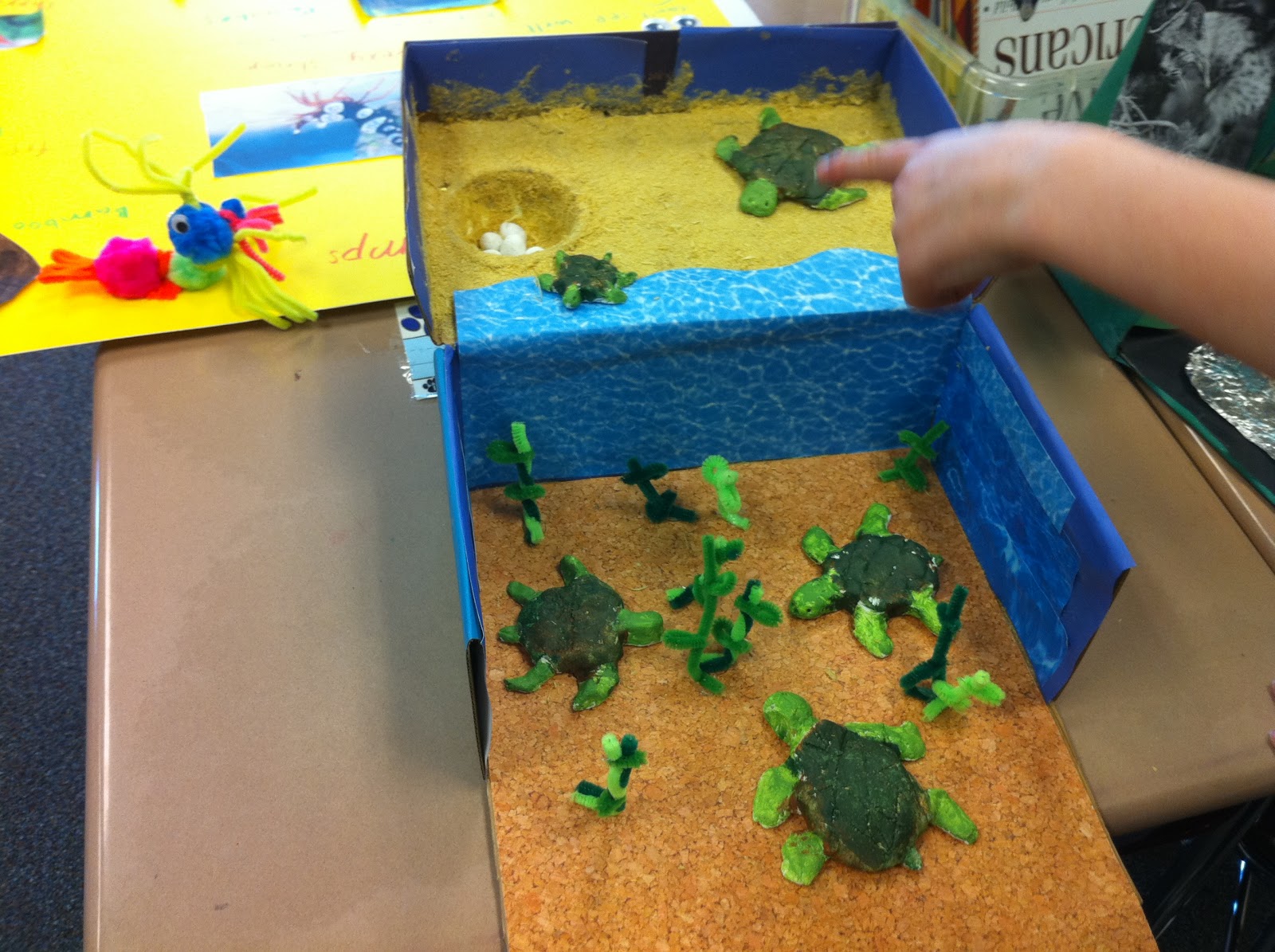
I hope your child and you both will fun with this project! Below are some pictures of projects from years past but please don't limit your child's creativity and duplicate a project from below. The pictures are to help give you both ideas but not to copy other projects. Students usually REALLY enjoy this project and their writing and speaking skills at this point in first grade are ripe for this kind of challenge.
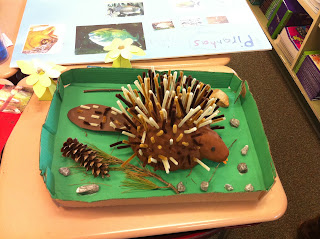


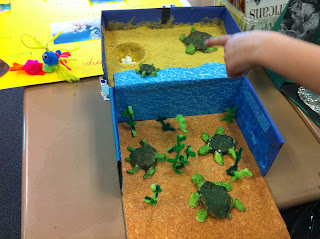

At the end of our animal unit in Science (approximately mid to end of March), there will be a cumulative project involving three parts: A handwritten paragraph, an art project and an oral presentation.
Please remember your child's project is to be student-driven (for all three portions). You can help your child but don't complete it for them. Also, the paragraph should have only words they can explain and understand. Their speech can be reading the paragraph, but also they should be practicing looking up at the "audience" and speaking loudly. They should be able to explain their art project as well and how they completed it. There will be a rubric specifically outlining each part of the project and students will have 3-4 weeks to complete it prior to their assigned presentation date.
I hope your child and you both will fun with this project! Below are some pictures of projects from years past but please don't limit your child's creativity and duplicate a project from below. The pictures are to help give you both ideas but not to copy other projects. Students usually REALLY enjoy this project and their writing and speaking skills at this point in first grade are ripe for this kind of challenge.



Sunday, February 15, 2015
Upcoming Ancient Greece and Rome Field Trip in late April 2015
Walter's Art Gallery Field trip
Ancient Greece and Rome Field Trip
March 18, 2014
We had AMAZING docents!!


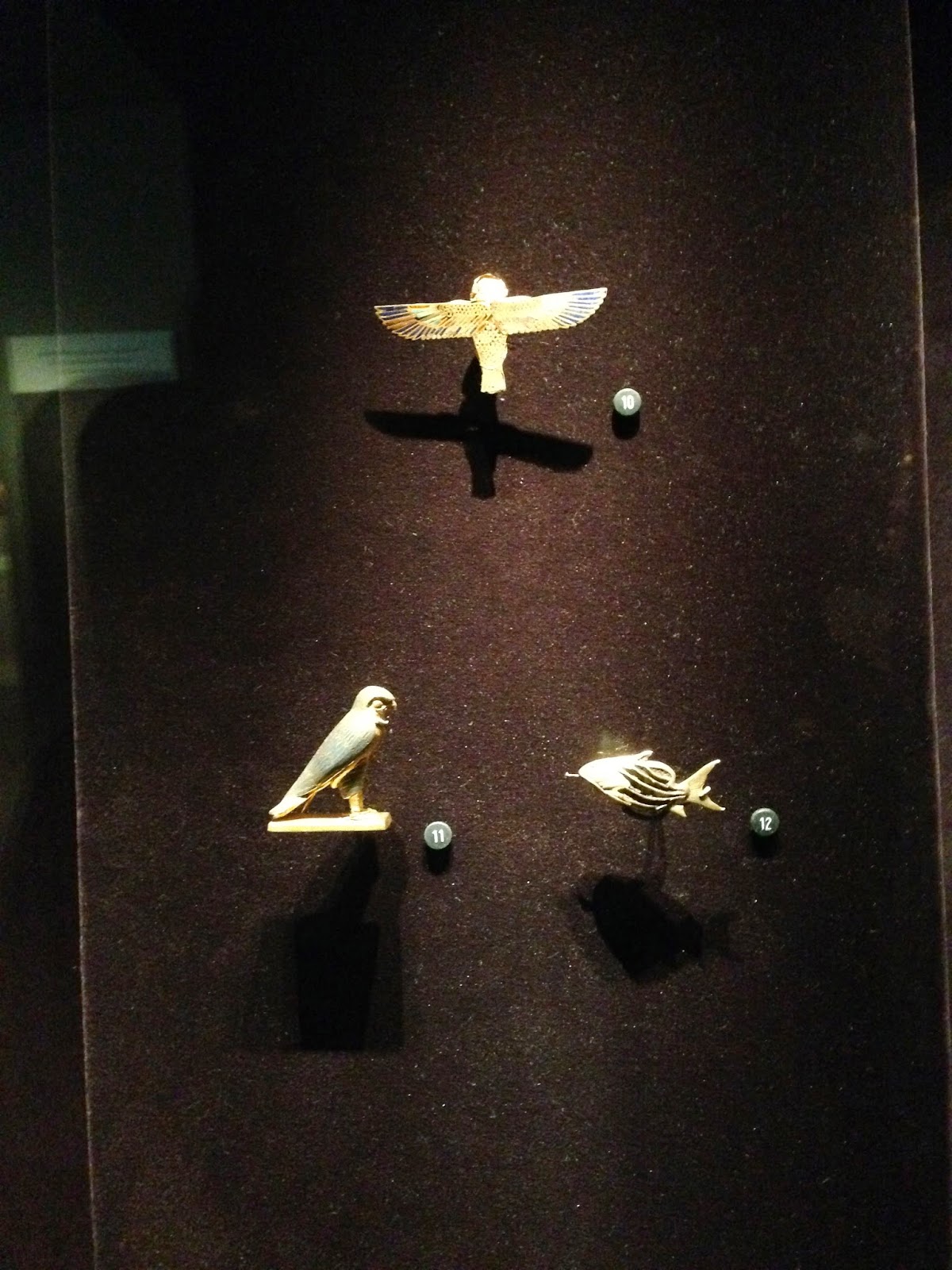
Nike, the goddess of victory, was a dominant image in Athens, where she was worshipped for her alliance with Athena, the patron goddess of the city. The swift, winged goddess is depicted in a running pose that evokes flight. Her wings have broken off in the above artifact. (Athens 500 B.C.)


Students listening intently to the Greek myth of Persephone and Demeter.



Tuesday, February 3, 2015
Monday, February 2, 2015
Sunday, October 12, 2014
First Grade 100 High Frequency Words (FCPS 1st grade list)
Click below to practice FCPS sight words. These are words that students should master prior to the middle of the school year. Reading Street sight words are more difficult than this list below, but students will have plenty of practice within school to master reading and spelling of these other sight words. If your child can fluently read the words below, have them practice spelling them.
High Frequency 100 words link for online flashcards
High Frequency 100 words link for online flashcards
Monday, September 22, 2014
Dibels Testing
Big Ideas in Reading and Dibels testing
Fluency
Fluency (automaticity) is reading words with no noticeable cognitive or mental effort. It is having mastered word recognition skills to the point of overlearning. Fundamental skills are so "automatic" that they do not require conscious attention.
Examples of automaticity:
Once accurate, fluency develops through plentiful opportunities for practice in which the task can be performed with a high rate of success.
Fluency
Examples of automaticity:
- shifting gears on a car
- playing a musical instrument
- playing a sport (serving a tennis ball)
Point to Remember:
Fluency is not an end in itself but a critical gateway to comprehension. Fluent reading frees resources to process meaning.
For students to develop fluency, they must:- perform the task or demonstrate the skill accurately, and
- perform the preskills of the task quickly and effortlessly.
Once accurate, fluency develops through plentiful opportunities for practice in which the task can be performed with a high rate of success.
Tuesday, December 3, 2013
Sunday, November 17, 2013
History Test on Chapters 1-6 Monday - details
Dear Parents,
The test tomorrow will only have material that was reviewed extensively with students this past week. There will be 25 multiple choice questions and all the questions will be taken from the review sheets that your child has in their binder under history.
My apologies concerning not having a review on the blog.
Mrs. Gowin
The test tomorrow will only have material that was reviewed extensively with students this past week. There will be 25 multiple choice questions and all the questions will be taken from the review sheets that your child has in their binder under history.
My apologies concerning not having a review on the blog.
Mrs. Gowin
Thursday, June 20, 2013
Friday, June 7, 2013
How to "Grow" a Reader

"You become a reader because you saw and heard someone you admired enjoying the experience, someone led you to the world of books even before you could read, let you taste the magic of stories, took you to the library, and allowed you to stay up later at night to read in bed." - Jim Trelease (20th century). The New Read-Aloud Handbook, ch. 1 (1985).

For children in grades K-5
“The more you read, the better you get, the more better you get, the more you like it; and the more you like it, the more you do it.”
― Jim Trelease, The Read-Aloud Handbook
Recommended series books:
Amelia Bedelia, Flat Stanley, Henry and Mudge, Magic Tree House, Magic School Bus, My Father's Dragon Trilogy (we are reading book 1 this week!), Rainbow Fairies, A to Z Mysteries and whatever books your child self-selects!
Good Reads 2nd Grade Reading List
Education.com Summer Reading List
The Best Books on Reading I've Ever Read (For Parents!)

The Read Aloud Handbook by Jim Trelease

and Read All About It! (book excerpts and reviews for teens and preteens).
Sunday, May 19, 2013
STEM In Class Activities
Recycling old crayons
(Solids to liquids to solids--
Energy in the form of HEAT makes the change possible)

Just out of the oven...The class loved their mini cupcake crayons!

Ordering animal tails in inches from least to greatest and greatest to least...
Ask your child if they remember the animal tails they had and how their lengths.

Did you know a bobcat's tail is only 8 inches long?

A lion's tail is 36 inches!

Fountain Rock Field Trip!
Living Organisms Program
May 2013

Ms. Alice discussed the walking stick's adaptations with us. It's hard to see, but it's on her palm!

We observed the toad eating and the food chain in action.

Rosy the tarantula

Having fun on the pond observation deck!

Observing the quarry pond organisms...we could see the turtles, but not much else due to the algae.

Ms. Terri had us demonstrated the food chain with puppets.

We touched a snake!


Thank you parent chaperones!


Subscribe to:
Posts (Atom)